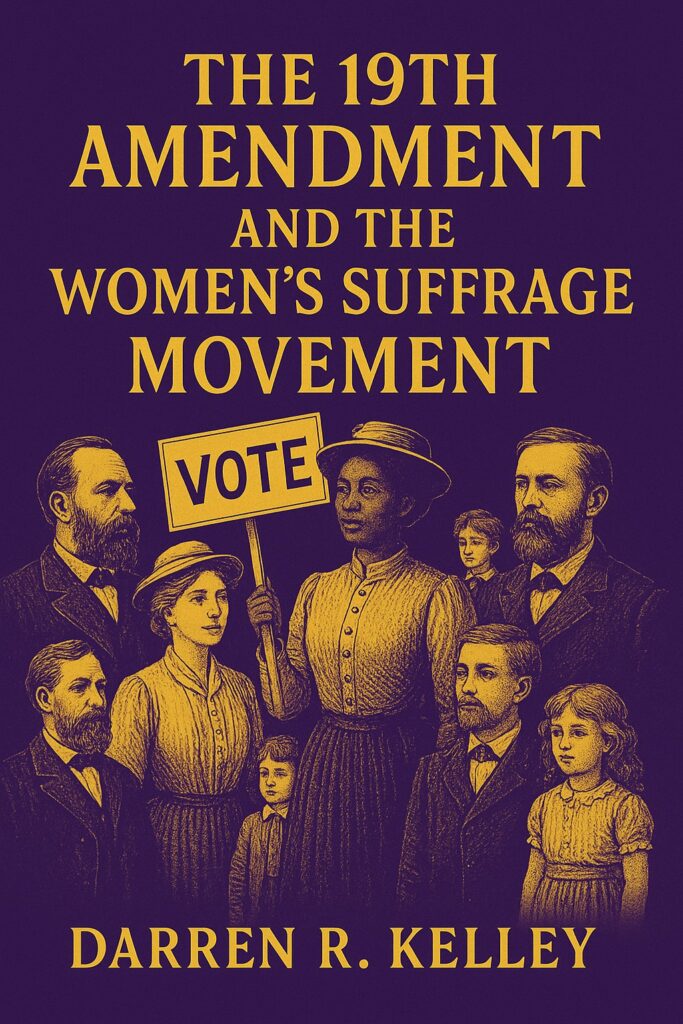
The 19th Amendment to the United States Constitution, ratified in 1920, marked a seismic shift in American democracy. It declared that the right to vote could not be denied or abridged based on sex—a victory won through decades of relentless activism, sacrifice, and strategic organizing by women across racial, regional, and class lines. Yet behind this landmark achievement lies a more complex and often untold story.
This book explores the long road to the 19th Amendment, tracing its roots from the Seneca Falls Convention of 1848 to the ratification battles in state legislatures. It examines not only the celebrated figures like Susan B. Anthony and Elizabeth Cady Stanton, but also the Black, Indigenous, Latina, and Asian American women whose contributions were marginalized or erased from mainstream suffrage narratives. Their voices—often silence are essential to understanding the full scope of the struggle for voting rights.
The 19th Amendment did not guarantee universal suffrage. Many women, particularly women of color, continued to face legal and extralegal barriers to the ballot box well into the 20th century. This book confronts those exclusions and asks: What does it mean to win the vote, but not the power?
By weaving historical analysis with archival research and personal stories, this work aims to illuminate the layered legacy of the 19th Amendment. It is not just a celebration of progress, but a reckoning with the unfinished business of democracy.